Wednesday, 20 November 2013

Poetic Documentary Final

Yesterday we showed our final finished film for the poetic documentary. We have changed a lot since the tutorial last week in most areas of our film. The advice we were given was to not make it too much like a short, conventional documentary by using more conventions of a poetic piece, to focus less on making a narrative and more on developing a theme using these poetic conventions and finally to consider the soundscape more and what to include in it to help portray these themes. As I've said previously, the group decided to focus on the theme of Hannah's personality in the final film.

The first thing we did to change and improve the film, was to think of the ways we could show Hannah's personality in an unconventional way. We decided after a long discussion, that we would use her fathers voice as a voice-over, taking individual words and phrases from an interview we recorded on the Saturday shoot, that described Hannah. We decided that we wouldn't have the fathers face or any talking heads in this film, to draw away from the conventional documentary style that this suggests. We believed the use of voice-over in small snippets and spaced out, gives the audience a chance to reflect on each word and really pay attention to what they are being told instead of just spoon feeding them the information about Hannah. We also wanted the theme to not be instantly obvious to the audience and make them decide for themselves who is being described to them and ultimately getting to know the person quite well, without seeing them speak on screen.
After finalising the idea of the voice over, we discussed what visuals we would have over the top of it. We all agreed we liked the idea of using old home video footage to show Hannah growing up so we decided to use that and select what part to use. Eventually we decided to use a section of home video of Hannah on a roller-coaster. We chose this because it was the most interesting visually of all the home video, as well as the fact it served as a visual metaphor for the journey Hannah has gone through in her life, contrasting the innocence of her youth with the seriousness of her condition later in her life.

We also agreed to make the film more visually interesting, we would cut away to archive pictures of Hannah when she was growing up in sync with when the voice over came in. This was to allow the audience to see Hannah more clearly and to start piecing together who the voice over was relating to, whilst still giving of an enigma as to why we are being told about this.

Although it isn't directly mentioned till the very end of the film, we wanted to slightly introduce the theme of the brain tumour in this piece, so it actually directly links to our main film and the way we did this was to create a small imitation brain scan through animation in AVID which we would use at the very start of the film, and overlay it throughout with reference to the voice over.
The sound-scape highlights when the brain scan effect comes in by fading out the roller-coaster sounds and screaming, with just a increasingly loud rumbling sound that is slightly distorted to give the impression of building pressure/tension in the film.

Final Feedback + Reflections
After presenting, we were given feedback from the group and Debbie on the poetic documentary. Everyone praised the use of the brain scan animation we included, specifically when it overlay on Hannah, as it made them question what it was and what its relevance was in the film and to Hannah, which was eventually explained by the voice over at the end. They also liked the sound scape used throughout as it added tension where necessary whilst also capturing the signs of the brain tumour and contrasting it with the innocence of youth. The roller-coaster was also praised as everyone also saw it as a metaphor of a journey through Hannah's life and the different stages she's gone through (dark tunnels and bright lights). A few criticisms were that the use of the reverb effect on the voice over seemed unnecessary and just thrown on, as well as the final montage of images of Hannah, which also seemed a bit out of place and out of sync with the sound.
If we were to improve the film I would taken out the reverb on most of the voice over to make the sound more clear to make it impact harder. I would also change the final montage to have the brain scan animation overlaying it and also sync it with the sound.

Tuesday, 12 November 2013

Poetic Documentary Planning + Tutorial Feedback

Poetic Documentary Planning
Our original idea for the poetic documentary was that we wanted it centred around Hannah but as a child. This was so we could introduce the audience to Hannah, but only by giving a brief background view of her through the eyes of her family and their memories of her. The reason we wanted to do this is because the subject matter still relates to our main documentary because it is about Hannah and obviously her childhood would affect how she is as a person now, but also we didn't want to introduce the fact that she has had a brain tumour and has beaten cancer at her young age. The reason we didn't want to do this is to give an enigma effect to the poetic piece so the audience question who this is they are hearing about and what are they like, as well as not directly addressing the main points that the final film will (the cancer and the charity). When we filmed last weekend in Chester, we decided to begin to create a sequence for the poetic film, including some of the sound from the family we had just got.

This is the detailed sequence we came up with which focuses on the childhood stories the family told us in interviews which we believe reflect Hannah's personality and childhood well. For this we wanted to mainly use (if not entirely use) old family photos and old home video which we were allowed to use a large quantity of. We began putting it into a sequence in preparation to show Debbie in the group tutorial today.

Tutorial Feedback and Next Steps
The main pointers we were given in the tutorial today were:
  • The sequence we had come up with was too much like a conventional documentary and not a poetic piece.
  • Some stories were inappropriate for what we were trying to convey.
  • We focused to hard on narrative in the sequence when we should be looking to explore and elaborate on themes.
  • Not much consideration into the sound-scape we could use and the sound we had was too much voice over dialogue.
We met as a group after and started to consider ways in which we could address these points. In the end we decided to scrap our original sequence and explore some potential themes instead of focusing on creating a narrative to make the film less conventional and more poetic. We eventually decided after a lengthy Skype discussion, that we focus on Hannah's personality as a theme by using a small selection of voice overs obtained through interviews, combined with still images and sections of interviews recorded last weekend.

We will combine these things with a carefully considered sound-scape which we will discuss tomorrow which will magnify the different parts of her personality with relation to the images shown on screen.

Monday, 11 November 2013

Shooting Weekend

This weekend we when to Chester for 4 days (Friday till Monday) to film the main documentary interviews, along with things we needed for the poetic piece. Our producer, Ellen, got in contact with the contributors, Hannah and her family, and arranged this weekend to meet up, conduct interviews and get the necessary footage for both our films. We met as a group before we went and started doing a detailed plan of what we needed to accomplish when we were there. The schedule we came up with is as follows:


Schedule
FRIDAY
Hannah available from 12 -3.
- 9:42 train - arrives 11:42
- Taxi to Hannah's with all equipment.
- Set up lighting for room interview.
- Part 2 + 4 of plan and questions in Hannah's room.
- Review (plan more cutaways if needed).
- (emphasis on childhood stories).
SATURDAY
Hannah available from 3 onwards.
- Time lapse of city.
- Wide shot of Chester - shopping centre.
- River and bridge establishers.
- Meet Hannah at 3.
- Part 1 + 3 of plan and questions in living room.
SUNDAY
Hannah not available all day.
- Review previous days footage- look for potential re-shoots.
- Cut aways of High school.
- Obtain more cut-aways if necessary.
- Begin to put together poetic documentary sequence.
MONDAY
Hannah available from 12-4.
 - Hannah's living room, part 5 of plan and questions.
- Walking and talking interview on walls or bridge.
- Cut aways of location of interview and University.

Here is a sample of the sections of questions we were working off:

Questions
PART 1
(Hannah's family)
- How would you describe Hannah?
- How did she cope with the experience/how did you cope?
- What was Hannah like growing up? For example: Hobbies?
- Do you have any memorable stories from her childhood? (light-hearted/getting into mischief)
 PART 2

(Hannah)
- Where did you grow up?
- What did you do when you were younger? i.e. Hobbies
- Do you have any funny memories from this?
 PART 3
(Hannah)
- How did you first become aware of the brain tumour?
- How did this make you feel?
- What were the signs/symptoms?
- What was going through your mind while you were waiting for the results?
- Did you find it hard telling people/did they treat you differently?
- Were they supportive?
 PART 4
(Hannah)
- How did you find out about The Brain Tumour Charity?
- What inspired you to get involved?
- How did you go about raising the money?
- Did your family and friends get involved?
- Can you give examples of people that it has helped?
- How much money have you raised so far?
- What was your biggest event?
- What does the money raised go towards?
- How does it make you feel?
- What are the plans for the future of the charity?
 PART 5
(Parents/Hannah)
- Talk about achievements:
- Carrying the Olympic Torch
- Ellen MacArthur
- Awards
- Houses of Parliament speech

Although these weren't the final questions we used in the interviews, they give a rough idea of our narrative structure and the sorts of things we were asking Hannah and her family.
When planning we also constructed a equipment list together, making sure we had all the necessary equipment to complete four days of shooting with.
Equipment List

EQUIPMENT LIST:
- 2 Cameras (cannon 6D and 600D)
- Shoulder rig
- Radio mic
- Boom mic and pole
- XLR lead
- Marantz
- Reflector
- 2x dedo
- Track/dolly
- Tripod
- Batteries
- Extension lead
- View finder
- Avid Editing Software

My role in the as the cinematographer, was to consider what shots to get, where to get them from and what techniques and types of shots we should get in which parts of the film. To do this effectively, I created a rough shot list for the weekend and did some rough floor plans of the different interviews we wanted and knew how we wanted them to look. The only reason these are rough plans and not extremely detailed, is because we wanted some spontaneity for the film so it didn't appear to be heavily scripted/staged and ultimately to increase its authenticity.
Shot list


Friday Floor Plan
Saturday Floor Plan
Weekend Shoot and Reflections
On Friday we follow the schedule very closely and well and got some very nice content and shots from it. We also added in doing some interior shots of her house and room to serve as cutaways in the film. Here is a sample of some of the footage we got.


 This is a still we got from the interview on Saturday.
This is a still from the final set of interviews on Monday.
In my opinion the weekend of shooting was a big success, we got to meet Hannah and her family and find out a great deal about her as a person. We followed the schedule very precisely and because of that we managed to effectively use the time we had with Hannah and get quality footage from it.
In terms of cinematography, I think that the variety of shots we got over the weekend were very positive as not only were they well considered and composed, I also did a number of takes with each one with different pieces of equipment. I did this because when we use certain shots for cutaways or establisher's, we can cut between the different types of shot (from tracking to static) for a more aesthetic and less boring film. I also think the different locations for the interviews will work very well for the final cut as the audience won't be bored by just seeing the one background again and again when seeing Hannah. The reason we did this was, as well as to not make it boring, to make the locations reflect the flow of the narrative e.g. when Hannah talks about her brain tumour (a very personal thing) we have her sat on her bed in her room behind an inspirational quote she admires.
Things that I would like to improve on would be that in the interviews, the eye-line isn't where we were advised to have it in the workshop session the previous week. When we showed this to Debbie she pointed it out and said that it may be that we have to re-shoot some of the interviews. However my personal opinion is that we won't have to re-shoot very much (maybe around half the questions for the Friday interview) as the framing of the shot and location still does the same thing the eye-line would do if it were changed. I am also worried about the quality of the content Hannah would give if we did re-shoot as it could sound more scripted and less spontaneous. Finally I would like to film more shots of Hannah doing a daily routine chore as it would give us more footage to use as cut-aways that still engage the audience with the narrative and what Hannah is saying.


Wednesday, 6 November 2013

Death In Gaza Analysis

Death In Gaza (2004) is a documentary by James Miller and is about a the conflict between Israelis and Palestinians in Gaza and how the fighting is effecting the Palestinian children's childhood. The film also has a sub-plot that tells the story of how the director and camera operator James Miller, was killed whilst filming and didn't get time to finish the whole film (as he wanted to get the Israeli children's perspective as well).
The film opens with just a simple montage of text on screen that gives the audience background information about the conflict and a brief history of the major events surrounding Gaza. This is very effective in this film as the audience may not be aware of the past of the area and how important that information is in understanding the rest of the film. Our film will most likely not use this technique at the start of the film as we want there to be some enigma around the main contributor Hannah, so we can keep the audience enticed and encourage them to carry on watching. We may use this convention at the end of our film when informing the audience where she is now, what she's doing and how much money she's raised etc.
The film introduces the main stories in the film with the use of a narrator (voice of god). This is to explain the context of the shots used as well as what was about to happen/was happening on screen if it was unclear. This technique is usually used to compensate for sloppy edits or a lack of footage which makes the context of what's being shown on screen unclear to the audience and is generally not used within documentary film making. However, this film twists occasionally to a 'the making of' style of film when this voice over is used in conjunction with the voices of the crew in the back of the shots discussing what to do. The combination of putting these two styles of films together in one can be a little overwhelming at times as the audience isn't sure which documentary they are watching and some of the common conventions of one, mix in with the other. Having said that, in this film it isn't too bad as it mimics the chaotic nature of the subject matter and narrative and also gives a very realistic representation of it at the same time.
Finally, the film uses archive footage and archive voice over during parts of the film that require context and explanation. The use of this over the arguably un-edited footage of scenes of conflict makes a very powerful impact on the audience by showing the realism and horror of these news stories. We are going to adapt this convention in our film by using archive footage and archive sound to create a different emotional effect on the audience. We will attempt to make the audience empathise with Hannah and create a connection between them by showing her growing up as a child, this is so when we introduce her being diagnosed with cancer, the emotional impact will be greater on the audience as they feel as though they are experiencing it with her and not as just an observer.

Tuesday, 5 November 2013

Interview Workshop

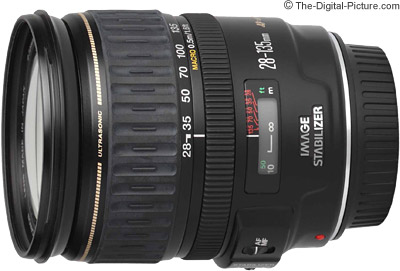
Today we did an interview workshop based around learning technical techniques used in documentary film making that we can apply when we make our own films. As I am the cinematographer for our project, I focused on the camera and lighting aspect in this seminar and tried out the various possible techniques that we may use in our own film.Our group has decided we are going to film on a Canon 6D as the main camera, and use a Canon 600D as our back-up/ second camera when filming on location in Chester. During this workshop I became familiar with the settings of the 6D as well as how to comfortably shoot on it. We were shooting in full frame 1920x1080 resolution at 50mb/s and 25 frames per second, in order to get the best possible quality whilst shooting. Today I used the 55mm lens mainly, but we will also be using a zoom lens, 28-135mm, when shooting on location for exterior shots.

Source : http://www.photoreview.com.au/reviews/lenses/dx/canon-ef-s-18-55mm-f-3.5-5.6-is-lens
Source : http://www.the-digital-picture.com/Reviews/Canon-EF-28-135mm-f-3.5-5.6-IS-USM-Lens-Review.aspx


 Firstly, we did a walk and talk style interview which involves the subject and the camera moving, tracking the subject. We executed this by attaching the 6D onto a shoulder rig where we filmed the subject walking up a hill, from the front, for 30 seconds. The challenge here was to keep a sharp focus on the subject and keeping the camera steady and not shaky. With the 55mm lens we found this somewhat problematic as the depth of field is very low and changeable when moving so in our main documentary we will most likely use the 28-135mm lens to make it easer to keep Hannah in focus. The stabilisation shouldn't be an issue in our own documentary because the 6D sensor is very good and the 28-135mm lens comes with an image stabilizer which will aid with the shots quality.

The second element I looked at was lighting for interior set interviews. We have already decided to use one or two of these in our final film so we all paid very close attention on this part. We went through a standard 3-point set-up first for a recap on what we have already learnt last year.
Source : http://dean-prog.blogspot.co.uk/2011/03/lighting-research-essay.html
Even with this information however, we don't know if there will be room for this kind of set up when we shoot on location and what other factors may vary when shooting so we will be prepared for anything and try and use as much practical lighting on location to aid us as we can. The main point is to get the subject as well lit as possible to not make the camera quality drop and become grainy due to turning up the ISO to compensate.

Location Scout and First Day of Filming

This Monday we went to Chester to scout out locations we may want to film in as well as to get some preliminary cut away's for our documentary. We had already done some research before coming to the location so we knew of a few shots we may want to get, thanks to http://www.chester360.co.uk/attractions-in-chester.htm
We thought the best locations would be, the Amphitheatre
Source: http://www.chester360.co.uk/attractions-in-chester.htm
 The Cathedral
 Queens Park Bridge

The reason we chose these locations are that they establish where the documentary is set as well as them being aesthetically looking places. We also want to shoot Hannah in and around these areas, to give them context within the documentary. Along side these, we also want a mixture of shots of Hannah doing normal everyday things such as going shopping, walking around or even just doing work. We also have discussed potentially filming her doing some charity work/ money collecting around town to show her participation in raising money for brain tumour awareness.
Monday's shoot went really well, it gave me a chance to familiarise myself with the camera and test out some techniques I can use when filming the rest of the project.