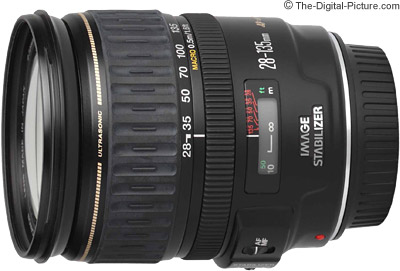
Today we did an interview workshop based around learning technical techniques used in documentary film making that we can apply when we make our own films. As I am the cinematographer for our project, I focused on the camera and lighting aspect in this seminar and tried out the various possible techniques that we may use in our own film.Our group has decided we are going to film on a Canon 6D as the main camera, and use a Canon 600D as our back-up/ second camera when filming on location in Chester. During this workshop I became familiar with the settings of the 6D as well as how to comfortably shoot on it. We were shooting in full frame 1920x1080 resolution at 50mb/s and 25 frames per second, in order to get the best possible quality whilst shooting. Today I used the 55mm lens mainly, but we will also be using a zoom lens, 28-135mm, when shooting on location for exterior shots.
 |
| Source : http://www.photoreview.com.au/reviews/lenses/dx/canon-ef-s-18-55mm-f-3.5-5.6-is-lens |
 |
| Source : http://www.the-digital-picture.com/Reviews/Canon-EF-28-135mm-f-3.5-5.6-IS-USM-Lens-Review.aspx |
|
|
|
|
Firstly, we did a walk and talk style interview which involves the subject and the camera moving, tracking the subject. We executed this by attaching the 6D onto a shoulder rig where we filmed the subject walking up a hill, from the front, for 30 seconds. The challenge here was to keep a sharp focus on the subject and keeping the camera steady and not shaky. With the 55mm lens we found this somewhat problematic as the depth of field is very low and changeable when moving so in our main documentary we will most likely use the 28-135mm lens to make it easer to keep Hannah in focus. The stabilisation shouldn't be an issue in our own documentary because the 6D sensor is very good and the 28-135mm lens comes with an image stabilizer which will aid with the shots quality.
The second element I looked at was lighting for interior set interviews. We have already decided to use one or two of these in our final film so we all paid very close attention on this part. We went through a standard 3-point set-up first for a recap on what we have already learnt last year.
 |
| Source : http://dean-prog.blogspot.co.uk/2011/03/lighting-research-essay.html |
Even with this information however, we don't know if there will be room for this kind of set up when we shoot on location and what other factors may vary when shooting so we will be prepared for anything and try and use as much practical lighting on location to aid us as we can. The main point is to get the subject as well lit as possible to not make the camera quality drop and become grainy due to turning up the ISO to compensate.



No comments:
Post a Comment